香港大會堂紀念花園的初心 — 薪火相傳紀念保衛戰中犧牲的軍人和平民
立場新聞 2021/08/28 18:53
 Watershed Hong Kong 製圖
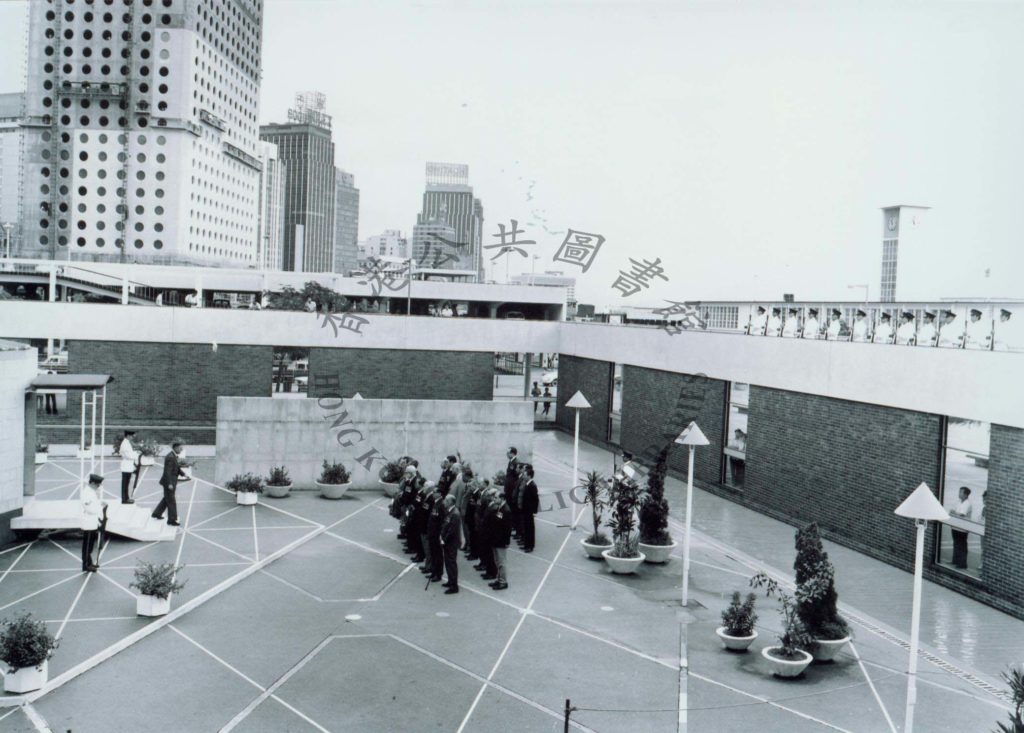
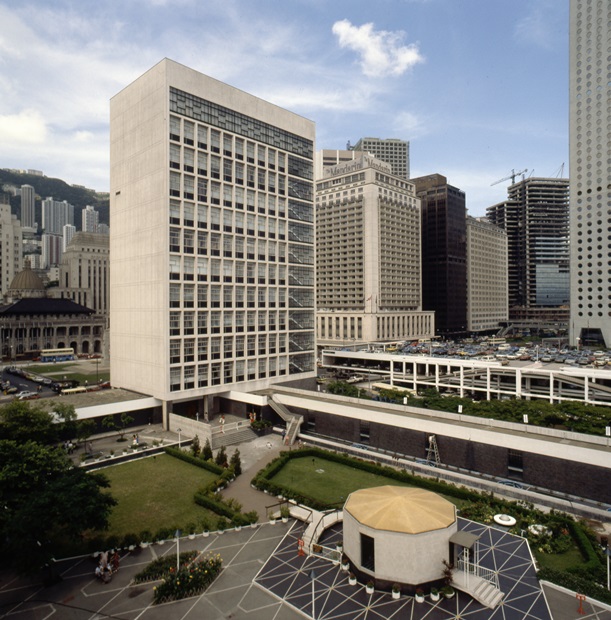
It was simply that, although there might be memorials, both tangible and intangible, there was nothing of which the people of Hong Kong, irrespective of race or creed, could say “This is a heritage which we can pass on to future generations who may well be proud of their sons and daughters who laid down their lives in the defence of Hong Kong”.

…Here would be the two sets of Volunteer Memorial Gates, dedicated to the Volunteers, leading into a Garden of Remembrance dedicated to all those who had laid down their lives in the service of Hong Kong, irrespective of whether they had carried arms or not. This hallowed plot would be open to all, to enter, to revere and to meditate.
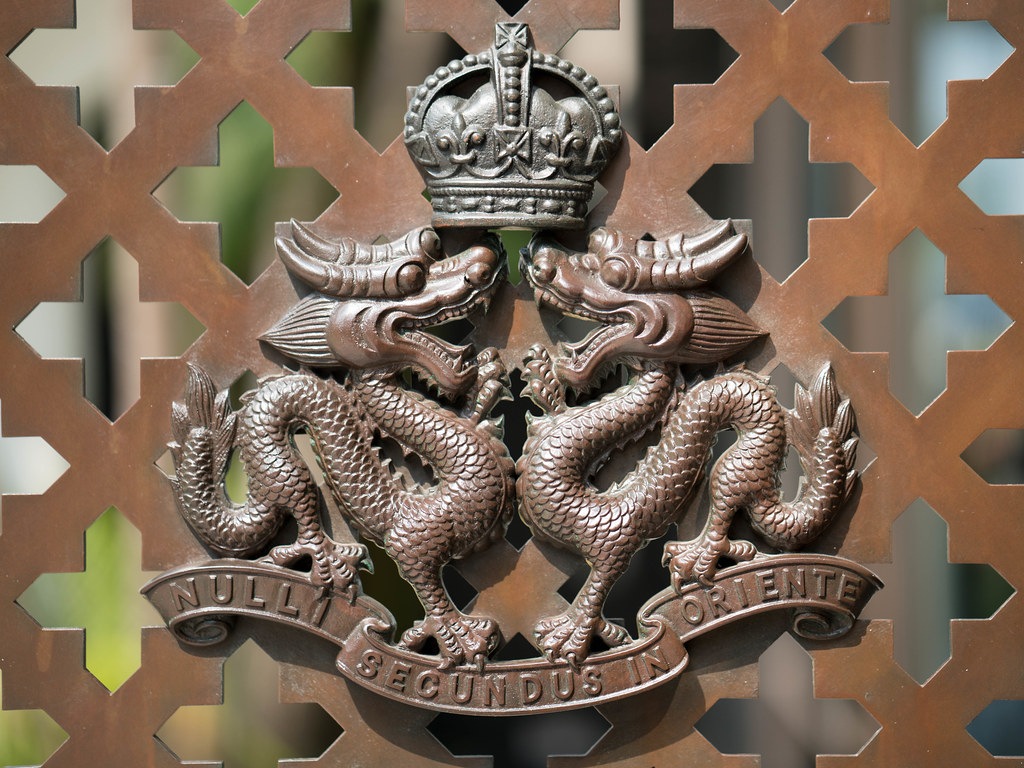
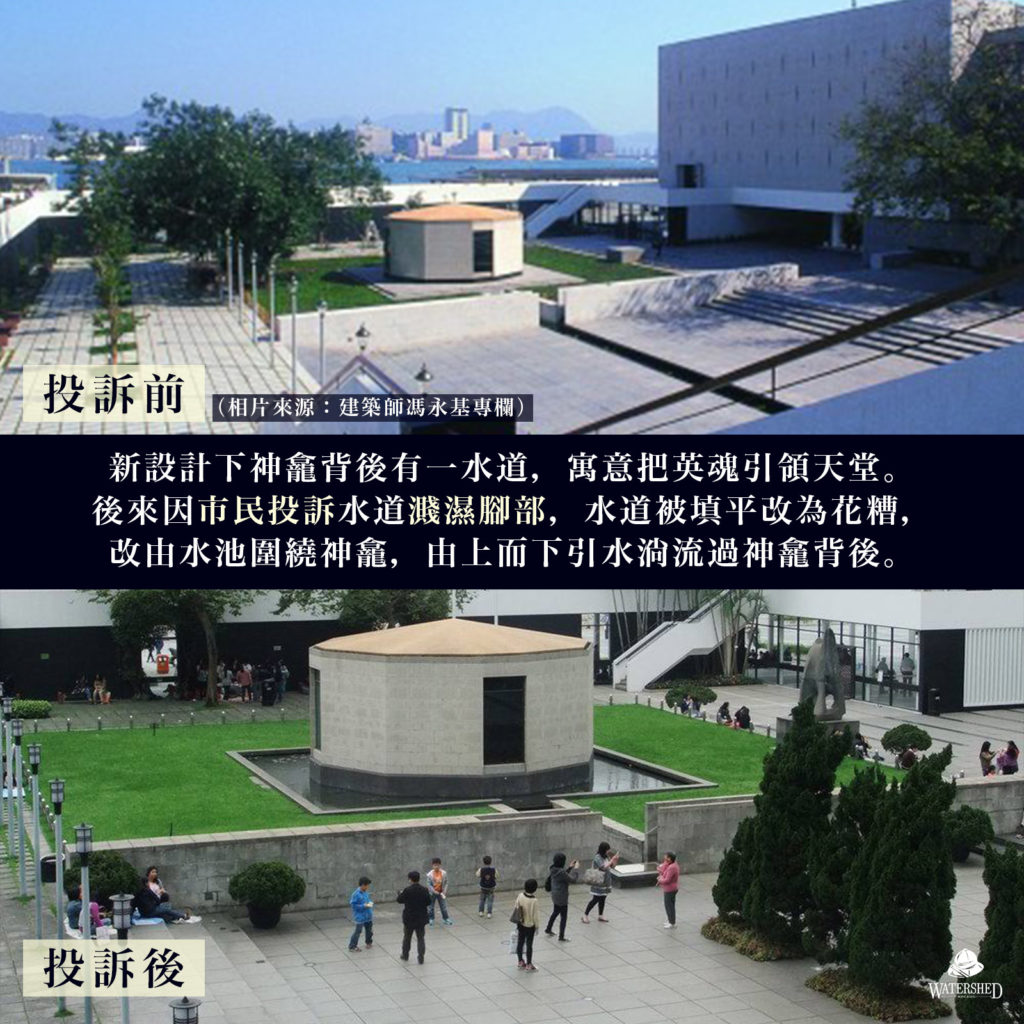
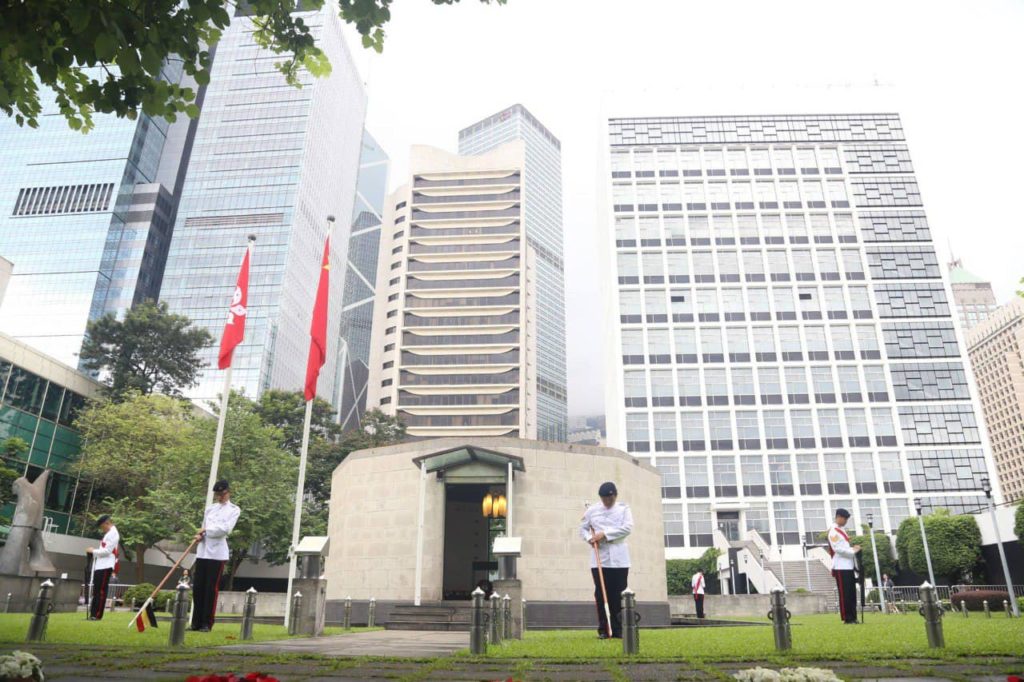
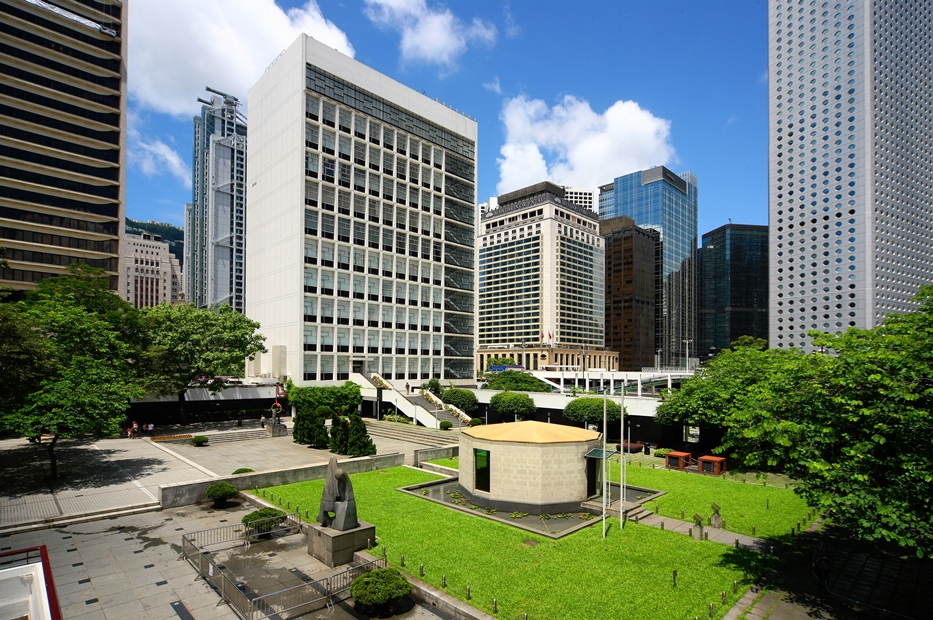
In the centre of this sacred Garden, there would be a Shrine, a plain humble edifice with its wall pointing in all directions and to all parts of the world from whence had come not only Hong Kong’s loyal sons and daughters, but from whence had come all those, without any ties in the Colony, who had fought side by side with them.
「本港下一代之市民及來港訪問之人士進入神龕及看到名冊上名字時,將會自勉:彼等乃真正效忠本港之兒女,於離開神龕時,亦會謹記鐫在神龕上羅拔布祿之名句:彼等曾飽經細故,亦曾聆聽音樂,既曾在睡眠中,亦曾清醒,且受吾人所深愛,今雖逝,猶使吾人獲交而引以自傲。」
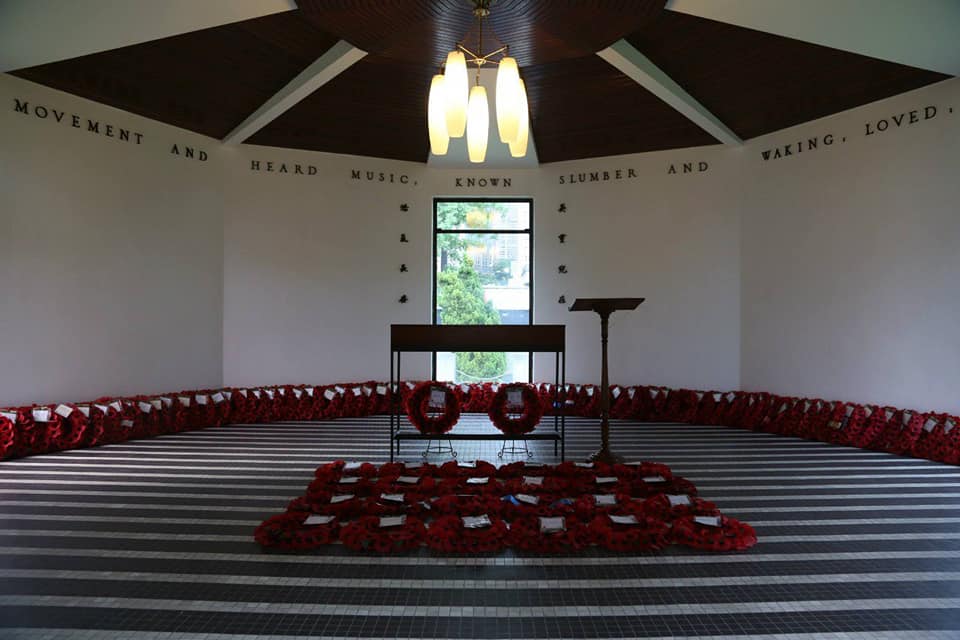
Hong Kong’s Tribute To Her Glorious Dead

“These had seen movement and heard music; known slumber and waking, loved; gone proudly friended” – Rupert Brooke.

The war had been over for almost 10 years. Most people wanted to forget about the war and the suffering which followed in its trail, they said. There were so many “memorials”, in any case. Did we not have the Military Cemeteries, so beautiful in their isolation? And there were memorials commemorating various organizations which had taken part in the struggle for freedom in this part of the world. Then there was the Cenotaph. Was this not symbolic of all those who had laid down their lives for a cause, not only in the last war but in the Great War – all wars?

These were the arguments, the obstacles, which had to be overcome if an ideal, just conceived, was to be born and then grow to maturity. And what was this ideal, this dream? It was simply that, although there might be memorials, both tangible and intangible, there was nothing of which the people of Hong Kong, irrespective of race or creed, could say “This is a heritage which we can pass on to future generations who may well be proud of their sons and daughters who laid down their lives in the defence of Hong Kong”.

Just as fighting is associated with war, so was the idea fundamentally associated with Hong Kong’s own fighting forces – The Hong Kong Volunteer Defence Corps. This, then, was the foundation upon which to work. Before any progress could be made in the intended direction, many problems would have to be resolved. This was fully appreciated right at the outset. The idea of a Volunteer War Memorial was presented to the Volunteer authorities and received their blessing although it was fully appreciated that success was problematical. The project had now become official.

What form should this Memorial take? This was far too momentous a decision for one man, or even a small unrepresentative group of men, to take. A committee was formed, representing various interests, which spent many hours in discussion and in examining various proposals. It was very soon resolved that, whatever form the Memorial might eventually take, it must be without emphasis on race or religion. Any decision must also be influenced by the amount of money that could be raised. And this was an imponderable factor, the most weighty problem of all.

After due consideration, the Committee decided to take the various problems to the highest authority, the Governor, Sir Alexander Grantham. The whole idea was received with greater sympathy than could have been reasonably anticipated and the Chairman left Government House with so much encouragement that it was decided to proceed, at once, with collection of funds.

This optimism was based on the fact that the Committee had been privileged by being given a preview of the plans, then in the embryonic stage, of the proposed new City Hall. It had also been given the promise that facilities would somehow be provided for the erection of Volunteer Memorial Gates and a Garden of Remembrance.

Apart from radio broadcasts in various languages, appeals were sent out to business houses in the Colony, to residents and also to former residents and Volunteers who had long since left Hong Kong. Donations started to flow in, not only from Hong Kong but from many parts of the world. It was most gratifying to the Committee. Two major problems had been successfully resolved but there were many more to be overcome.

While, primarily, the main purpose had been to erect a Volunteer Memorial, it soon became apparent that, if the Memorial was to fulfil its rightful function, it would have to encompass the efforts of all those who had played their part in the defence of Hong Kong, whether they were in the actual armed forces or engaged in the various forms of Civil Defence.

It was found necessary to review the overall plan and the Committee made its decision. Technical guidance was essential but this would encroach on the funds which were so badly needed for the scheme. Sir Alexander Grantham again came to the rescue and graciously arranged for the services of Mr. A.M.J. Wright, the then Chief Architect of the Public Works Department, to be co-opted on to the Committee. This gentleman, together with Mr. H.J. Tebbutt, a well-known architect and also a Volunteer, commenced the difficult task of interpreting the ideas of laymen. Very soon, the scheme began to take shape. Here would be the two sets of Volunteer Memorial Gates, dedicated to the Volunteers, leading into a Garden of Remembrance dedicated to all those who had laid down their lives in the service of Hong Kong, irrespective of whether they had carried arms or not. This hallowed plot would be open to all, to enter, to revere and to meditate.

In the centre of this sacred Garden, there would be a Shrine, a plain humble edifice with its wall pointing in all directions and to all parts of the world from whence had come not only Hong Kong’s loyal sons and daughters, but from whence had come all those, without any ties in the Colony, who had fought side by side with them. Inside the Shrine, there would be a place on its walls for commemorative plaques which would record, for all to see, the various units and formations which had taken part in the defence of Hong Kong.

And, finally, there would be a Roll of Honour, recording the names of our dead. The preparation of this Roll represented a task of the first magnitude as it was so essential that it should be fully comprehensive and accurate. A complete check had to be made of all available records covering the Hong Kong Volunteer Defence Corps and all of the other organizations. A preliminary list was thus compiled which was thoroughly cross-checked with the records at the Sai Wan, Stanley and other Cemeteries. It was felt that even this approach was not adequate for the accuracy desired and the lists were again submitted to the various organizations. These lists were not only displayed at the various Star Ferry piers but were also sent to “South China Morning Post”, the “Tiger Standard” and to the Wah Kiu Yat Po”. These papers very kindly arranged for the publication of the lists and the public were asked to assist in verification. And no official list of names, in Chinese, was available, the “Wah Kiu Yat Po” undertook the onerous tasks of a complete translation.

All of the above information which had been accumulated, had to be carefully co-ordinated and Lt. Col. Michael Jennings, Deputy Commandant of the Royal Hong Kong Defence Force, played no small part in the compilation of the final Roll of Honours as it appears today. Even with all the care that has been taken, it is still possible that there may be errors and omissions and, for this reason, a provision Roll of Honour will be available in the Shrine so that the Public may examine it and draw the attention of the Committee to any errors which may have occurred. After the passage of a year, it is felt that the Roll should be considered as accurate and it will be printed in its final form.

It has taken many years for the infant idea to grow to full maturity – years of impatience with the slow progress, frustration and, on occasions, apprehension to many. It is very difficult to describe the feelings of those, responsible for the project when, ultimately, a scale model of the whole City Hall Scheme, incorporating their ideal, became available. What we see today is the result of much planning, the close co-operation of the Government and the generosity of the people of Hong Kong. All this, and the dedication of a small group of citizens with a clearly defined concept of the responsibility to future generations.

Here, then, is Hong Kong’s tribute to her glorious dead!
Citation – The Hon Sir Albert Rodrigues, Honorary Degrees Congregation, the University of Hong Kong
Club Lusitano History
香港海防博物館〈香港義勇防衛軍救護車隊〉
馮永基〈誰是香港大會堂的設計師?〉